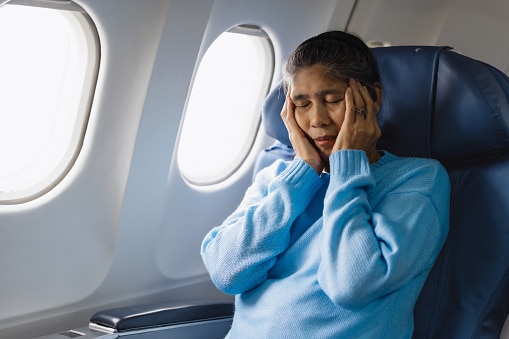
Have you recently traveled by airplane and discovered that it made your tinnitus flare up? There are several aspects to flying that can trigger tinnitus; for many who suffer from it, flying can be downright miserable. Let’s explore why that is and how you can cope on your next flight.
What Is Tinnitus?
Over 25 million American adults suffer from tinnitus. It’s commonly called “ringing in the ears,” but it can also sound like whooshing, hissing, wheezing, buzzing, humming or any other sound. The catch is that nothing is physically creating the sound. Instead, it is a phantom sound generated entirely in the brain. There are many reasons why the brain generates tinnitus, and it can vary from person to person.
Tinnitus Triggers While Flying
If your tinnitus gets worse while you’re flying in an airplane, it’s probably due to one or more of these factors:
- Engine noise. Some people find the dull roar of the plane engine soothing for their tinnitus, almost like white noise; others, not so much. For many people, the high volume of plane engines can aggravate their already sensitive ears and worsen tinnitus. You’ll notice this effect is even stronger if you’re sitting near the engine.
- Air pressure changes. Rapid changes in air pressure can cause ear barotrauma, also known, rather appropriately, as “airplane ear.” This will feel like your ears are clogged or blocked and may cause ear pain. Stress on the ears and auditory system can make tinnitus flare up. Plus, due to muffled hearing, tinnitus may seem louder because everything else sounds quieter.
- Boredom. Flying means sitting in one place for a long time, often for hours. If you’re bored on your flight, your brain is under-stimulated, so it will look for something new to focus on. It may turn its attention to tinnitus and make it appear louder or more intense.
- Stress. Stress is strongly correlated with tinnitus, and even for the most seasoned travelers, air travel can be stressful. Hopefully, you’re traveling to a relaxing location and will feel a reduction in stress once you land. While you’re in the middle of the situation, however, you may feel your stress levels rising, which can exacerbate tinnitus.
- Dehydration or poor nutrition. Dehydration can cause tinnitus flare-ups in some people, as can consuming too many salty or sugary foods. In airports and on airplanes, it can be difficult to drink enough water and avoid junk food entirely (especially with all the tempting fast-food options in the airport terminal).
How to Find Relief
Here are some tips on how to work through the triggers listed above.
To deal with engine noise, consider wearing noise-canceling headphones and listening to music, a podcast or watching a movie. You can also use earplugs, but make sure you use aviation earplugs, which equalize pressure between the ear and the outside world; this will help against airplane ear.
You can also deal with air pressure changes by helping your Eustachian tubes open. These tubes are inside your head, connecting your middle ear to the back of the throat, and they play a key role in equalizing pressure between the inside of your ear and the outside. Manipulate them by working your jaw, chewing or yawning. Chewing gum can be very effective.
Fight boredom by bringing plenty of distractions! A book, movie, puzzle book or catching up on work can all give your brain something to work on while you fly. Additionally, this can help pull your focus away from the engine noise, helping you kill two tinnitus triggers with one stone.
While you fly, try to relax as best as you can to lower stress. Once again, listening to music, reading a book or watching a movie can be very helpful here. You may also try doing some relaxing rituals before your flight, such as deep breathing or journaling, to bring stress levels down before takeoff.
And finally, you can mitigate the effects of dehydration and poor nutrition by bringing a water bottle and healthy snacks or meals from home onto your flight. In-flight food is often especially high in salt due to the effect air travel has on our taste buds, so avoid eating the airline’s boxed lunch and eat something you prepped at home instead.
Our final tip is to see a hearing health professional for help with your tinnitus. If you haven’t had a tinnitus evaluation before, consider having one before your next flight. It might shed light on other triggers that may arise during your travels, and your audiologist may have great ideas for coping strategies. Contact Certified Hearing Aid Consultants today to learn more or schedule an appointment.